




What Is a Dzi Bead?
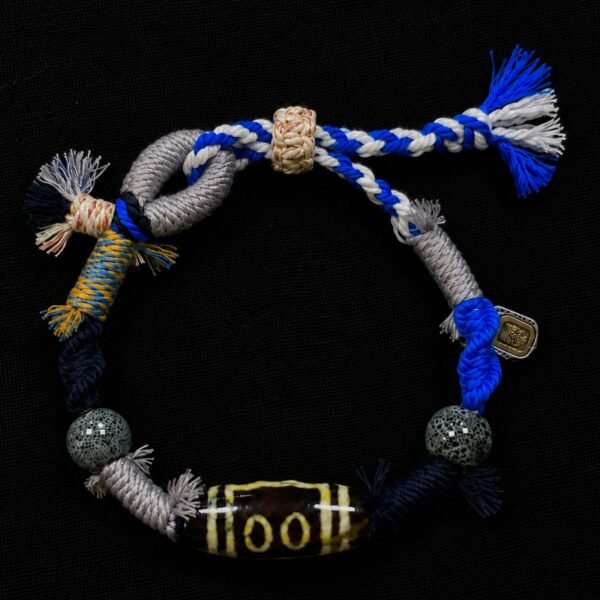
A dzi (said “zee”) is a bead, usually long, marked with bands, lines or circles known as eyes. Traditional dzi are agate with the pattern added by hand. They have been worn across Tibet and the Himalaya for centuries, kept close as protection and handed down through families. The Tibetan word means shine or splendor; in Chinese the bead is called tiānzhū, “heaven’s bead.”
Where dzi beads come from
Nobody knows for certain. Their origin and age are still unsettled, and the stories handed down do not agree with one another.
What is certain is that decorating this family of stones is very old. More than four thousand years ago, craftsmen in the Indus Valley were already etching white designs onto carnelian beads. How directly the dzi descends from that tradition is still debated.
Tibet has its own account. Some people hold that dzi were never made at all and formed by themselves, because herders and farmers have sometimes turned them up in the grass and the soil.
How the pattern gets there
The usual account runs like this: agate is shaped and drilled, then coated with alkaline and copper-bearing materials and fired, whitening some areas and darkening others.
In 2020, researchers examined one dzi with synchrotron light. They found natural agate with the pattern added afterward, and copper concentrated around the etched rings, which fits the old descriptions. It was a single bead, so it says little about where or when dzi were made.
How dzi are treated in Tibet
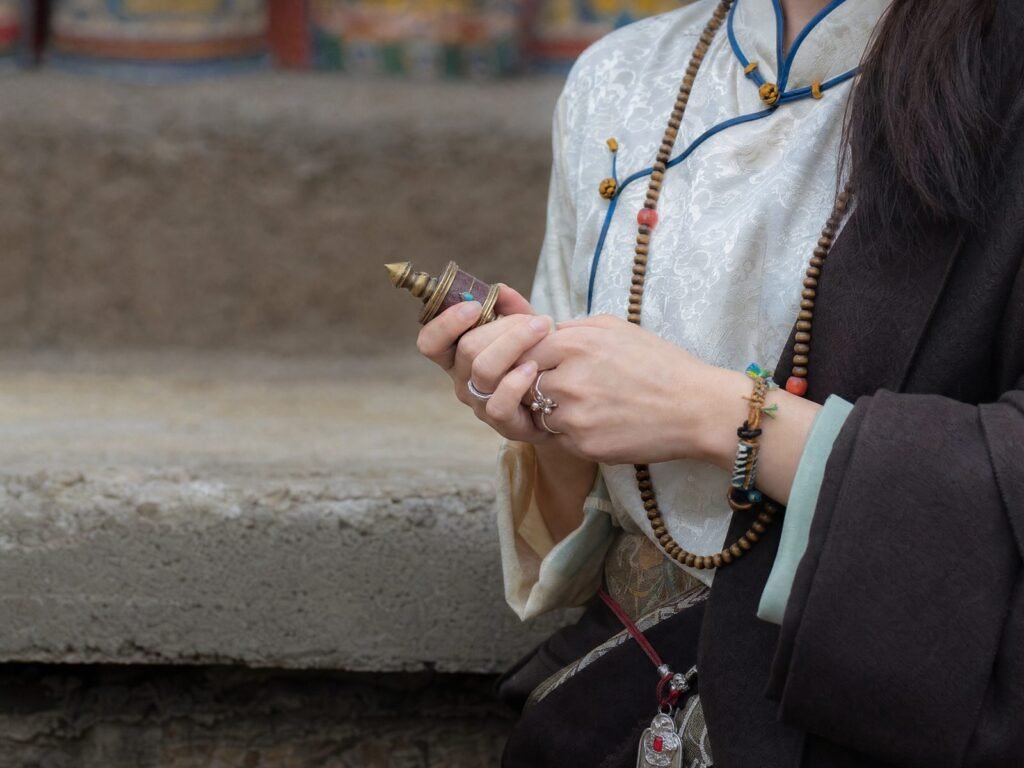
A dzi is more than an ornament. Traditionally it is strung into a necklace, often beside coral and sometimes amber or turquoise, and passed from one generation to the next. Old beads often carry chips and worn edges from a lifetime against the skin.
People believe a dzi turns misfortune away and brings good fortune. That is a belief, not a promise, and we pass it on as one.
What the eyes and patterns mean
Dzi are often sorted by their number of eyes. The count matters, but the meaning changes from region to region and from one teller to the next. These are the common readings:
- Three eyes: often linked with good fortune and long life.
- Nine eyes: the most sought after, and often called the most auspicious.
- Tiger tooth: courage and protection, as on the Nanhong Agate Dzi Bracelet.
- Treasure vase: one of the Eight Auspicious Symbols, said never to empty. You can see one on the Tibetan Bone Dzi Bracelet.
- Guiren: a Chinese name meaning benefactor, worn in the hope of meeting the people who help you along the way, as on the Agate Guiren Dzi Bracelet.
Beads with no eyes at all have their admirers too. Many people simply choose the pattern they keep looking at.
Old beads and new beads
Old beads are scarce, and the finest have sold for hundreds of thousands of dollars. Even collectors argue over their age, and artificial wear has become convincing, so weathering, cracks or a worn drill hole prove little on their own.
New beads come in a wide range: etched agate, and lower-priced beads of glass, resin and other materials. Price usually follows the material and the quality of the work. Many Tibetans wear new beads too. A new bead is only a problem when someone sells it as an antique.
Before you buy, it is fair to ask two things: is this bead old or newly made, and if it is old, how do you know? If an inexpensive bead is offered as a thousand years old, you already have your answer.
The dzi beads we use
The beads in our shop today are newly made, and none is sold as an antique. Each one is picked out by hand. They differ in material, and the price of a piece follows its bead. Ask us about any bead and we will tell you what it is.
We also keep some older beads that are not for sale yet. They will appear under Monastery Finds when they are ready.
No workshop of craftsmen stands behind the cords: one pair of hands knots them all. A set design takes about two hours. Some days the hands wander, and a piece comes out that has never been made before.
Common questions
Is every dzi bead made of agate?
Traditional dzi are usually agate. Beads made today also come in glass, resin and other materials.
Can I wear a dzi every day?
Yes. In Tibet a dzi is worn against the skin, and the wear becomes part of the bead.
Do I need to be Tibetan or Buddhist to wear one?
Of course not. As we say: may all beings find their true heart amid the noise, and in that heart find ease. It is so with all things. Follow your true heart and you will be at ease.
How do I care for it?
A bead can chip if dropped. Keep cord pieces away from long soaks and perfume.